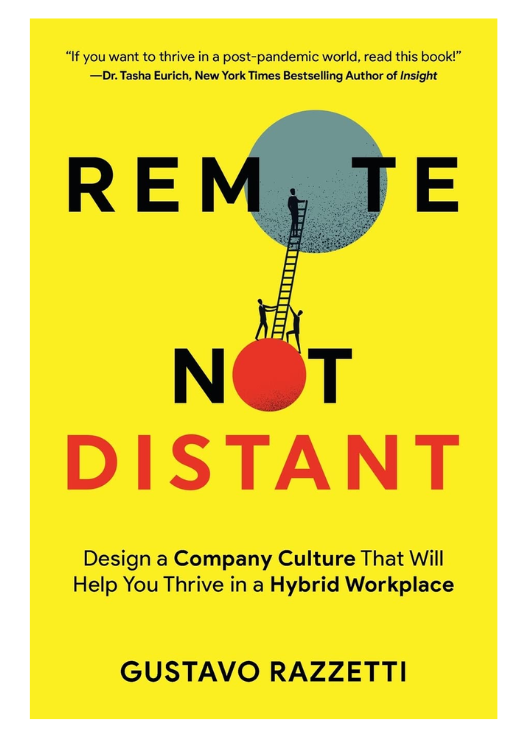
A practice note on hybrid work, intentional culture, and why distance is not the same as disconnection.
Why this one made the shelf: Because the future of work was never really about where people sit. It was always about how people connect, collaborate, decide, belong, and do good work together.
What it helps us notice: Razzetti argues that hybrid culture does not happen by accident. It has to be intentionally designed. Through his work on culture design, including tools like the Culture Design Canvas, he invites organizations to move beyond the old office-versus-remote debate and focus instead on the behaviours, rituals, agreements, and mindsets that help teams thrive in a hybrid workplace.
The useful trouble it causes: Remote Not Distant challenges the idea that proximity automatically creates culture. Being in the same building does not guarantee trust, collaboration, creativity, or belonging. And being apart does not have to mean being disconnected. The real question is whether the organization has designed the conditions for people to work well together.
What this has to do with the work: In facilitation, strategy, leadership, and organizational change, culture is not what we say in onboarding decks. It is what people experience in meetings, decisions, communication norms, conflict, flexibility, accountability, and everyday rituals. Razzetti’s work reminds us that hybrid work requires both flexibility and discipline — enough freedom to honour people’s lives and enough structure to keep the work coherent.
Good company for: HR practitioners, leaders, managers, consultants, culture designers, change agents, and anyone who has ever heard “we need people back in the office for culture” and quietly wondered whether the culture was okay to begin with.